What is 'Priming' and why is it so important?
We talk a lot about filter priming; it’s the key message in our product manuals, our videos show how it’s done, and we send emails out after every purchase, explaining how important it is. Inadequate priming is the cause of most of the faults we hear about.
So what is it? And why is it so important?
The fibre membranes in our ultrafiltration cartridges have microscopic holes - pores – throughout; it’s the pores that trap viruses, bacteria, and parasites, preventing them from going through the filter and into… well.. us. If the fibre membranes dry out, the pores close, preventing everything from passing through – even water.
To prevent this from happening during manufacturing (and while sitting in our warehouse or being shipped across the globe), the membranes are coated in food-grade glycerin. The glycerin slows down the drying-out process. It doesn’t stop it completely - which is why our filters have a shelf life: three years or so for standard filters (ten or more when supplied sealed in foil).
What happens if you don’t prime a filter?
If you don’t prime the filter before you use it, water simply will not pass through. Before you can use your purifier, the glycerin has to be soaked - to soften it - and then flushed through to free up all the pores. If you don’t flush it all through, there are two potential problems:
- The first is that your filter flow rate will not be as fast as it should be. It makes sense that if some of the pores are still filled with glycerin, less water will be able to pass through. That will improve as you start to use it, but we find that people over-pump to get the flow they expect, which can cause other issues with the casing or the pump.
- The second is that the glycerin we use is food-grade. It’s the stuff that people add to cakes, sweets, and marshmallows to prevent them from drying out. It tastes sweet and is commonly used as a sugar substitute. It makes it perfectly safe for us to consume, should some be left on the filter. But, because it’s food-grade, if it’s left damp for any length of time, it will go moldy. While the pores won’t let the mold through to the drinking water, no one wants to see black mold growing on the inside of their water purifier.
Priming correctly removes all the glycerin completely, so nothing is left blocked, and nothing goes moldy. If in doubt, do it twice - especially if you aren't using your purifier straight away.
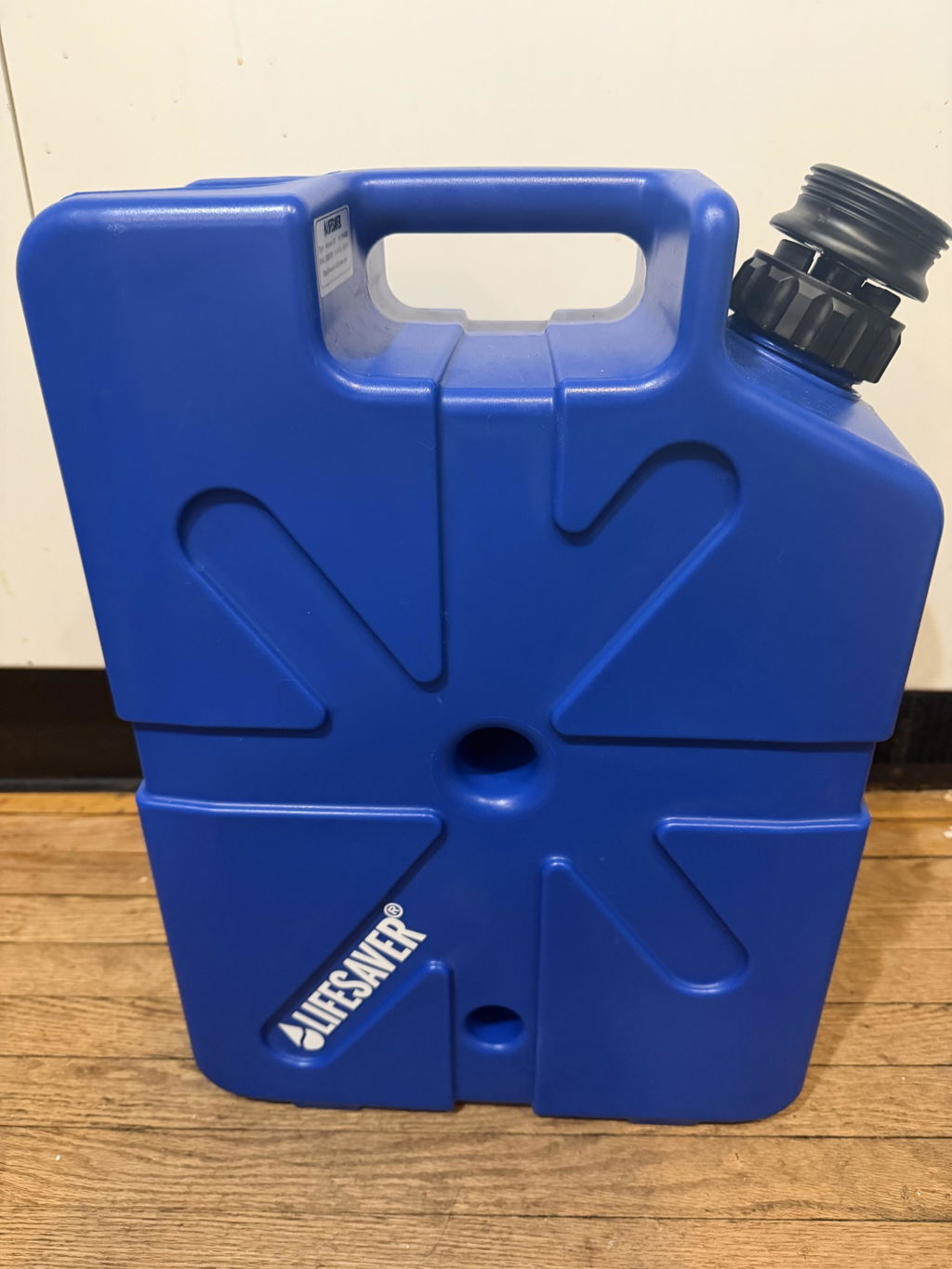
The amount of water you need varies depending on the LifeSaver you are priming – the Jerrycan needs more water than the Wayfarer.
When should I do the priming?
We recommend you do your priming while you are at home with access to clean tap water. It also allows you to figure out how it all works before your trip. And if there is a fault or defect, we’ll be able to resolve it for you before you set off on your travels.
That said, many people buy our products as part of their Emergency Preparedness kit and don’t want to use them immediately, but save them for ‘just in case’. If you decide to prime your LifeSaver anyway, so that in an emergency you know how to use it, do the priming process twice to be extra certain that the glycerin has been flushed through.
What happens after a filter has been primed?
Once the filter has been primed and the glycerin is gone, it’s up to you to make sure the filter doesn’t dry out. This is easily done by always leaving a little clean water in your LifeSaver when it’s in storage. This water should be replaced every month or so. Think of your LifeSaver like a houseplant; it will need regular watering to keep it in top condition. A correctly primed, correctly stored filter will last indefinitely – or until the filter reaches its capacity and the FailSafe technology kicks in. Then you’ll need to replace the filter and prime the new one…
The exception to the rule
The LifeSaver Lifeline Personal Water Filter is slightly different. The pores are larger (it’s a filter rather than a purifier), so they aren’t at risk of closing up when they dry out. We recommend you give it a good soak when you first get it and discard the first water through it (using a Squeeze Pouch or plastic bottle). After that, it can be dried out after each use and go back in your backpack for next time.
You can find videos on priming under each product, and the details are included in the manuals. If you have any further questions, please get in touch.