How is EPI water score calculated and what does it tell you?
If you’re researching water safety before you travel abroad, you’ll quickly come across something called the EPI Water Score. The Environmental Performance Index (EPI), was developed by researchers at Yale Centre for Environmental Law & Policy, and Columbia University Centre for International Earth Science Information Network.
It measures how well countries manage their water resources in terms of human health, ecosystem protection, and sustainability.
HOW IS THE EPI WATER SCORE CALCULATED?
The Water Score is not based on a single number. It is built from multiple indicators, grouped into categories. Each indicator is standardised (converted to a 0–100 scale), weighted, and then combined.
Drinking Water & Sanitation (Human Health)
Measures access and safety:
- % of population with access to safe drinking water
- % with access to sanitation services
- Wastewater treatment coverage
Water Resources Management (Ecosystem Vitality)
Measures environmental sustainability:
- Water stress (withdrawals vs. available supply)
- Wastewater treatment effectiveness
- Nutrient pollution (nitrogen & phosphorus runoff)
Protection of freshwater ecosystems
Standardisation Process
Countries are scored relative to policy targets (e.g., universal access to safe water), or to the best-performing countries. Each indicator is converted to a 0–100 scale, where 100 is the best performance (near target), and 0 is the worst.
Indicators are weighted within their categories, and categories are weighted within the overall EPI score.
SO, WHAT DOES THE EPI WATER SCORE TELL YOU?
It tells you:
- How safe a country’s water supply is for people.
- Whether water withdrawals exceed renewable supply.
- How well wastewater and nutrient runoff are managed.
- How well freshwater ecosystems (rivers, wetlands) are preserved.
Think of the EPI Water Score as a report card that answers:
“Is this country providing safe water to its people while also protecting rivers and ecosystems for the future?”
A high score means you can expect clean drinking water, good sanitation, low pollution and sustainable water use. A low score means unsafe water, poor sanitation, potential water shortages and damaged ecosystems.
What’s especially helpful when planning your off-grid travels is that the EPI Score isn’t just about tap water; it also indicates how polluted the water in rivers, lakes and streams is likely to be.

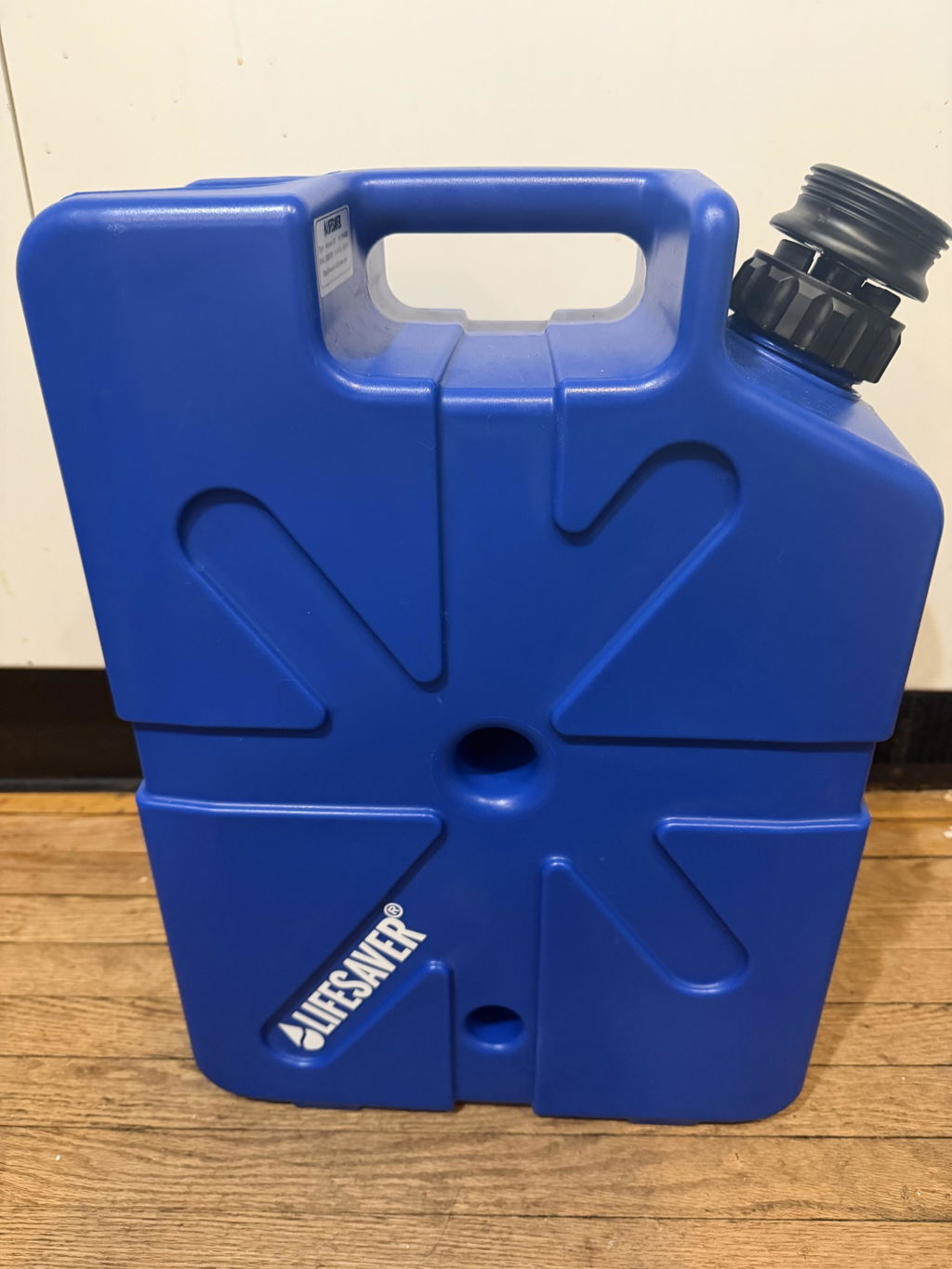
In the red zones, where not only is the tap water suspect (or non-existent), wild water could be scarce, and is likely to contain additional nasties. A Graphene:Ultra Jerrycan will provide extra protection against heavy metals, PFAS, chemicals or pharmaceuticals that leach into groundwater from unchecked industrial activity or inadequate sanitation. It holds a generous 18.5 litres, so you can go further before you need to fill up again.
If you are on holiday in a red zone, be aware that salads and fruits washed in tap water - and ice cubes made from tap water - could also make you unwell, so choose carefully when eating food prepared by locals. Use water from your LifeSaver purifier to clean your teeth, hands and face too.
In the blue areas, unless you are particularly prone to tummy upsets, you’ll probably be absolutely fine drinking the tap water, and any of our standard water purifiers will deal with water you source from the wild.
The grey areas are where an EPI isn’t available, so assume the worst to be on the safe side.
We cannot stress enough how important it is to do your research on the places you’re going to visit, especially if you’re travelling to a different continent. If you’d like to know more, check out these helpful websites:
https://epi.yale.edu/measure/2024/H2O
https://worldpopulationreview.com/country-rankings/water-quality-by-country
https://www.comparethemarket.com/travel-insurance/content/tap-water-index/
EPI Water Scores by Country
Country |
EPI |
|
| Afghanistan | 33.1 | |
| Albania | 69.6 | |
| Algeria | 61.3 | |
| Angola | 22.5 | |
| Antigua and Barbuda | 56.2 | |
| Argentina | 72.2 | |
| Armenia | 79.4 | |
| Australia | 99.2 | |
| Austria | 99.2 | |
| Azerbaijan | 49.8 | |
| Bahamas | 61.9 | |
| Bahrain | 67 | |
| Bangladesh | 32.6 | |
| Barbados | 58.1 | |
| Belarus | 79.2 | |
| Belgium | 93.9 | |
| Belize | 49.3 | |
| Benin | 20.8 | |
| Bhutan | 39.8 | |
| Bolivia | 47.7 | |
| Bosnia and Herzegovina | 78.7 | |
| Botswana | 21.2 | |
| Brazil | 60.1 | |
| Bulgaria | 73.2 | |
| Burkina Faso | 16.3 | |
|
17.5 | |
| Cambodia | 40.7 | |
| Cameroon | 23.7 | |
| Canada | 99.7 | |
| Central African Republic | 9.2 | |
| Chad | 4.6 | |
| Chile | 82.3 | |
| China | 75.7 | |
| Colombia | 58.9 | |
| Comoros | 26.8 | |
| Costa Rica | 62.7 | |
|
80.8 | |
| Cuba | 57 | |
| Cyprus | 88.8 | |
| Czechia | 72.8 | |
| Denmark | 93.4 | |
| Djibouti | 26.6 | |
| Dominica | 49.5 | |
| Dominican Republic | 42.1 | |
| Ecuador | 64.5 | |
| Egypt | 54.3 | |
| El Salvador | 50.9 | |
| Equatorial Guinea | 34.4 | |
| Eritrea | 16.6 | |
| Estonia | 81.2 | |
| Eswatini | 18.7 | |
| Ethiopia | 19.2 | |
| Fiji | 35.1 | |
| Finland | 100 | |
| France | 87.6 | |
| Gabon | 35.3 | |
| Gambia | 25.7 | |
| Georgia | 76.1 | |
| Germany | 100 | |
| Ghana | 27.8 | |
| Greece | 100 | |
| Grenada | 53 | |
| Guatemala | 31 | |
| Guinea | 20.7 | |
| Guinea-Bissau | 20.3 | |
| Guyana | 41.3 | |
| Haiti | 18.5 | |
| Honduras | 38.7 | |
| Hungary | 71.4 | |
| Iceland | 99.4 | |
| India | 25.5 | |
| Indonesia | 31 | |
| Iran | 67.5 | |
| Iraq | 57.4 | |
| Ireland | 100 | |
|
93.8 | |
| Italy | 100 | |
| Jamaica | 53.5 | |
| Japan | 76.7 | |
| Jordan | 65.5 | |
| Kazakhstan | 75.9 | |
| Kenya | 21.7 | |
| Kiribati | 22 | |
| Kuwait | 73.6 | |
| Kyrgyzstan | 62.6 | |
| Laos | 33.1 | |
| Latvia | 83.4 | |
| Lebanon | 55.8 | |
| Lesotho | 9.8 | |
| Liberia | 19.1 | |
| Lithuania | 77.1 | |
| Luxembourg | 99.8 | |
| Madagascar | 13.5 | |
| Malawi | 17.8 | |
| Malaysia | 50.9 | |
| Maldives | 45.2 | |
| Mali | 19 | |
| Malta | 97.1 | |
| Marshall Islands | 36.8 | |
|
27.7 | |
| Mauritius | 63.4 | |
| Mexico | 57.4 | |
| Micronesia | 39.3 | |
| Moldova | 68.8 | |
| Mongolia | 63.6 | |
| Montenegro | 95.2 | |
| Morocco | 49.5 | |
| Mozambique | 21.3 | |
| Myanmar | 36.2 | |
| Namibia | 20.2 | |
| Nepal | 34.7 | |
| Netherlands | 91.3 | |
| New Zealand | 85.7 | |
| Nicaragua | 48.7 | |
| Niger | 12.8 | |
|
14.5 | |
| North Macedonia | 69.4 | |
| Norway | 99.9 | |
| Oman | 62.4 | |
| Pakistan | 27.9 | |
| Panama | 49.2 | |
| Papua New Guinea | 21.8 | |
| Paraguay | 58.3 | |
| Peru | 57.7 | |
| Philippines | 40.4 | |
| Poland | 77.8 | |
| Portugal | 97.6 | |
| Qatar | 72.9 | |
| Romania | 69.6 | |
| Russia | 79.6 | |
| Rwanda | 25.5 | |
| Saint Lucia | 52.1 | |
| Saint Vincent and the Grenadines | 51.1 | |
| Samoa | 51.9 | |
| Sao Tome and Principe | 38.5 | |
| Saudi Arabia | 61.9 | |
| Senegal | 28.3 | |
| Serbia | 81 | |
| Seychelles | 51.8 | |
| Sierra Leone | 18.3 | |
| Singapore | 98.7 | |
|
87.6 | |
| Slovenia | 88.2 | |
| Solomon Islands | 34.7 | |
| South Africa | 25.2 | |
| South Korea | 88.9 | |
| Spain | 95.7 | |
| Sri Lanka | 51.4 | |
| Sudan | 40.8 | |
| Suriname | 41.1 | |
| Sweden | 97.4 | |
| Switzerland | 100 | |
| Taiwan | 68 | |
| Tajikistan | 33.1 | |
| Tanzania | 21.4 | |
| Thailand | 44.6 | |
| Timor-Leste | 34.1 | |
| Togo | 18.2 | |
| Tonga | 49.1 | |
| Trinidad and Tobago | 57.8 | |
| Tunisia | 60.1 | |
| Turkmenistan | 61 | |
| Uganda | 24.5 | |
| Ukraine | 75.9 | |
| United Arab Emirates | 67.8 | |
| United Kingdom | 100 | |
| Uruguay | 74.4 | |
| Uzbekistan | 76.8 | |
| Vanuatu | 33.1 | |
| Venezuela | 47.1 | |
| Zambia | 22.3 | |
| Zimbabwe | 19.7 |